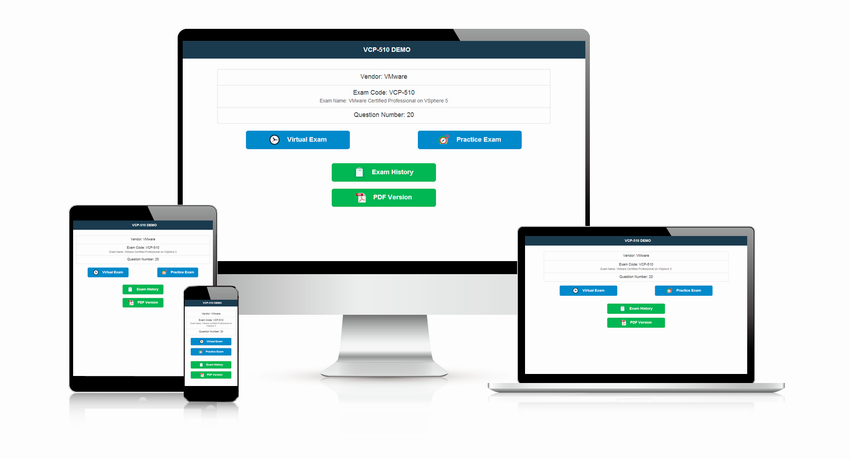
Lpi 101-500日本語 : LPIC-1 Exam 101, Part 1 of 2, version 5.0 (101-500日本語版)

101-500日本語 pass collection

Exam Code: 101-500J

Exam Name: LPIC-1 Exam 101, Part 1 of 2, version 5.0 (101-500日本語版)

Updated: Jul 19, 2026

Q & A: 299 Questions and Answers

101-500日本語 Free Demo download

Already choose to buy "PDF"
Price: $69.99 

About Lpi 101-500日本語 Exam

It's not easy for employees to find a job, of course harder to get an ideal job. (101-500日本語 Exam preparation files) In fact, many factors contribute to the unfavorable situation, like furious competition, higher requirements and so on. It is sure that the competition is more and fiercer, while job vacancies don't increase that fast. (101-500日本語 study materials) As a result, people need to do something to meet enterprises' raising requirements. With the steady growth in worldwide recognition about Lpi 101-500日本語 exam, a professional certificate has become an available tool to evaluate your working ability, which can bring you a well-paid job, more opportunities of promotion and higher salary. So choosing a right 101-500日本語 learning materials is very important for you, which can help you pass exam without toilsome efforts.

Free Download 101-500日本語 exam tests

LPI 101-500 Exam Syllabus Topics:

TopicDetails

System Architecture

Determine and configure hardware settings

Weight:2
Description:Candidates should be able to determine and configure fundamental system hardware

Key Knowledge Areas:
-Enable and disable integrated peripherals.
- Differentiate between the various types of mass storage devices.
- Determine hardware resources for devices.
-Tools and utilities to list various hardware information (e.g. lsusb, lspci, etc.).
-Tools and utilities to manipulate USB devices.
-Conceptual understanding of sysfs, udev and dbus.

The following is a partial list of the used files, terms and utilities:
-
/sys/
-/proc/
-/dev/
-modprobe
-lsmod
-lspci
-lsusb

Boot the system

Weight:3
Description:Candidates should be able to guide the system through the booting process.

Key Knowledge Areas:
-
Provide common commands to the boot loader and options to the kernel at boot time.
-Demonstrate knowledge of the boot sequence from BIOS/UEFI to boot completion.
-Understanding of SysVinit and systemd.
-Awareness of Upstart.
-Check boot events in the log files.

The following is a partial list of the used files,terms and utilities:
-dmesg
- journalctl
-BIOS
- UEFI
-bootloader
-kernel
-initramfs
-init
-SysVinit
-systemd

Change runlevels / boot targets and shutdown or reboot system

Weight:3
Description:Candidates should be able to manage the SysVinit runlevel or systemd boot target of the system. This objective includes changing to single user mode, shutdown or rebooting the system. Candidates should be able to alert users before switching runlevels / boot targets and properly terminate processes. This objective also includes setting the default SysVinit runlevel or systemd boot target. It also includes awareness of Upstart as an alternative to SysVinit or systemd.

Key Knowledge Areas:
-
Set the default runlevel or boot target.
-Change between runlevels / boot targets including single user mode.
-Shutdown and reboot from the command line.
-Alert users before switching runlevels / boot targets or other major system events.
-Properly terminate processes.
-Awareness of acpid.

The following is a partial list of the used files,terms and utilities:
-
/etc/inittab
-shutdown
-init
-/etc/init.d/
-telinit
-systemd
-systemctl
-/etc/systemd/
-/usr/lib/systemd/
-wall

Linux Installation and Package Management

Design hard disk layout

Weight:2
Description:Candidates should be able to design a disk partitioning scheme for a Linux system.

Key Knowledge Areas:
- Allocate filesystems and swap space to separate partitions or disks.
-Tailor the design to the intended use of the system.
-Ensure the /boot partition conforms to the hardware architecture requirements for booting.
-Knowledge of basic features of LVM.

The following is a partial list of the used files,terms and utilities:
-
/ (root) filesystem
-/var filesystem
-/home filesystem
-/boot filesystem
-EFI System Partition (ESP)
-swap space
-mount points
-partitions

Install a boot manager

Weight:2
Description:Candidates should be able to select, install and configure a boot manager.

Key Knowledge Areas:
-
Providing alternative boot locations and backup boot options.
-Install and configure a boot loader such as GRUB Legacy.
-Perform basic configuration changes for GRUB 2.
-Interact with the boot loader.

The following is a partial list of the used files, terms and utilities:
-
menu.lst, grub.cfg and grub.conf
-grub-install
-grub-mkconfig
-MBR

Manage shared libraries

Weight:1
Description:Candidates should be able to determine the shared libraries that executable programs depend on and install them when necessary.

Key Knowledge Areas:
-
Identify shared libraries.
-Identify the typical locations of system libraries.
-Load shared libraries.

The following is a partial list of the used files,terms and utilities:
-
ldd
-ldconfig
-/etc/ld.so.conf
-LD_LIBRARY_PATH

Use Debian package management

Weight:3
Description:Candidates should be able to perform package management using the Debian package tools.

Key Knowledge Areas:
-
Install, upgrade and uninstall Debian binary packages.
-Find packages containing specific files or libraries which may or may not be installed.
-Obtain package information like version, content, dependencies, package integrity and installation status (whether or not the package is installed).
- Awareness of apt.

The following is a partial list of the used files,terms and utilities:
-
/etc/apt/sources.list
-dpkg
-dpkg-reconfigure
-apt-get
-apt-cache

Use RPM and YUM package management

Weight:3
Description:Candidates should be able to perform package management usingRPM, YUM and Zypper.

Key Knowledge Areas:
-
Install, re-install, upgrade and remove packages using RPM, YUM and Zypper.
-Obtain information on RPM packages such as version, status, dependencies, integrity and signatures.
-Determine what files a package provides, as well as find which package a specific file comes from.
-Awareness of dnf.

The following is a partial list of the used files,terms and utilities:
-
rpm
-rpm2cpio
-/etc/yum.conf
-/etc/yum.repos.d/
-yum
-zypper

Linux as a virtualization guestWeight: 1
Description: Candidates should understand the implications of virtualization and cloud computing on a Linux guest system.

Key Knowledge Areas:
-Understand the general concept of virtual machines and containers.
-Understand common elements virtual machines in an IaaS cloud, such as computing instances, block storage and networking.
-Understand unique properties of a Linux system which have to changed when a system is cloned or used as a template.
-Understand how system images are used to deploy virtual machines, cloud instances and containers.
-Understand Linux extensions which integrate Linux with a virtualization product.
-Awareness of cloud-init.

The following is a partial list of the used files, terms and utilities:
-Virtual machine
-Linux container
-Application container
-Guest drivers
-SSH host keys
-D-Bus machine id


GNU and Unix Commands

Work on the command line

Weight:4
Description:Candidates should be able to interact with shells and commands using the command line. The objective assumes the Bash shell.

Key Knowledge Areas:
-
Use single shell commands and one line command sequences to perform basic tasks on the command line.
-Use and modify the shell environment including defining, referencing and exporting environment variables.
-Use and edit command history.
-Invoke commands inside and outside the defined path.

The following is a partial list of the used files,terms and utilities:
-
bash
-echo
-env
-export
-pwd
-set
-unset
-type
-which
-man
-uname
-history
-.bash_history
-Quoting

Process text streams using filters

Weight:2
Description:Candidates should be able to apply filters to text streams.

Key Knowledge Areas:
-
Send text files and output streams through text utility filters to modify the output using standard UNIX commands found in the GNU textutils package.

The following is a partial list of the used files, terms and utilities:
-bzcat
-cat
-cut
-head
-less
-md5sum
-nl
-od
-paste
-sed
-sha256sum
-sha512sum
-sort
-split
-tail
-tr
-uniq
-wc
-xzcat
-zcat

Perform basic file management

Weight:4
Description:Candidates should be able to use the basic Linux commands to manage files and directories.

Key Knowledge Areas:
-
Copy, move and remove files and directories individually.
-Copy multiple files and directories recursively.
-Remove files and directories recursively.
-Use simple and advanced wildcard specifications in commands.
-Using find to locate and act on files based on type, size, or time.
-Usage of tar, cpio and dd.

The following is a partial list of the used files, terms and utilities:
-
cp
-find
-mkdir
-mv
-ls
-rm
-rmdir
-touch
-tar
-cpio
-dd
-file
-gzip
-gunzip
-bzip2
-bunzip2
-xz
-unxz
-file globbing

Use streams, pipes and redirects

Weight:4
Description:Candidates should be able to redirect streams and connect them in order to efficiently process textual data. Tasks include redirecting standard input, standard output and standard error, piping the output of one command to the input of another command, using the output of one command as arguments to another command and sending output to both stdout and a file.

Key Knowledge Areas:
-
Redirecting standard input, standard output and standard error.
-Pipe the output of one command to the input of another command.
-Use the output of one command as arguments to another command.
-Send output to both stdout and a file.

The following is a partial list of the used files, terms and utilities:
-
tee
-xargs

Create, monitor and kill processes

Weight:4
Description:Candidates should be able to perform basic process management.

Key Knowledge Areas:
-
Run jobs in the foreground and background.
-Signal a program to continue running after logout.
-Monitor active processes.
-Select and sort processes for display.
-Send signals to processes.

The following is a partial list of the used files, terms and utilities:
-
&
-bg
-fg
-jobs
-kill
-nohup
-ps
-top
-free
-uptime
-pgrep
-pkill
-killall
-watch
-screen
-tmux

Modify process execution priorities

Weight:2
Description:Candidates should should be able to manage process execution priorities.

Key Knowledge Areas:
-
Know the default priority of a job that is created.
-Run a program with higher or lower priority than the default.
-Change the priority of a running process.

The following is a partial list of the used files, terms and utilities:
-
nice
-ps
-renice
-top

Search text files using regular expressions

Weight:2
Description:Candidates should be able to manipulate files and text data using regular expressions. This objective includes creating simple regular expressions containing several notational elements as well as understanding the differences between basic and extended regular expressions. It also includes using regular expression tools to perform searches through a filesystem or file content.

Key Knowledge Areas:
-
Create simple regular expressions containing several notational elements.
-Understand the differences between basic and extended regular expressions.
-Understand the concepts of special characters, character classes, quantifiers and anchors.
-Use regular expression tools to perform searches through a filesystem or file content.
-Use regular expressions to delete, change and substitute text.

The following is a partial list of the used files,terms and utilities:
-
grep
-egrep
-fgrep
-sed
-regex(7)

Basic file editing

Weight:3
Description:Candidates should be able to edit text files using vi. This objective includes vi navigation, vi modes, inserting, editing, deleting, copying and finding text. It also includes awareness of other common editors and setting the default editor.

Key Knowledge Areas:
-
Navigate a document using vi.
-Understand and use vi modes.
-Insert, edit, delete, copy and find text in vi.
-Awareness of Emacs, nano and vim.
-Configure the standard editor.

The following is a partial list of the used files, terms and utilities:
-
vi
-/, ?
-h,j,k,l
-i, o, a
- d, p, y, dd, yy
-ZZ, :w!, :q!
-EDITOR

Devices, Linux Filesystems, Filesystem Hierarchy Standard

Create partitions and filesystems

Weight:2
Description:Candidates should be able to configure disk partitions and then create filesystems on media such as hard disks. This includes the handling of swap partitions.

Key Knowledge Areas:
-
Manage MBR and GPT partition tables
-Use various mkfs commands to create various filesystems such as:
-ext2/ext3/ext4
-XFS
-VFAT
-exFAT
-Basic feature knowledge of Btrfs, including multi-device filesystems, compression and subvolumes.

The following is a partial list of the used files,terms and utilities:
-
fdisk
-gdisk
-parted
-mkfs
-mkswap

Maintain the integrity of filesystems

Weight:2
Description:Candidates should be able to maintain a standard filesystem, as well as the extra data associated with a journaling filesystem.

Key Knowledge Areas:
-
Verify the integrity of filesystems.
-Monitor free space and inodes.
-Repair simple filesystem problems.

The following is a partial list of the used files,terms and utilities:
-
du
-df
-fsck
-e2fsck
-mke2fs
-tune2fs
-xfs_repair
-xfs_fsr
-xfs_db

Control mounting and unmounting of filesystems

Weight:3
Description:Candidates should be able to configure the mounting of a filesystem.

Key Knowledge Areas:
-
Manually mount and unmount filesystems.
-Configure filesystem mounting on bootup.
-Configure user mountable removable filesystems.
-Use of labels and UUIDs for identifying and mounting file systems.
-Awareness of systemd mount units.

The following is a partial list of the used files, terms and utilities:
-/etc/fstab
-/media/
-mount
-umount
-blkid
-lsblk

Manage file permissions and ownership

Weight:3
Description:Candidates should be able to control file access through the proper use of permissions and ownerships.

Key Knowledge Areas:
-
Manage access permissions on regular and special files as well as directories.
-Use access modes such as suid, sgid and the sticky bit to maintain security.
-Know how to change the file creation mask.
-Use the group field to grant file access to group members.

The following is a partial list of the used files, terms and utilities:
-
chmod
-umask
-chown
-chgrp

Create and change hard and symbolic links

Weight:2
Description:Candidates should be able to create and manage hard and symbolic links to a file.

Key Knowledge Areas:
-
Create links.
-Identify hard and/or soft links.
-Copying versus linking files.
-Use links to support system administration tasks.

The following is a partial list of the used files,terms and utilities:
-
ln
-ls

Find system files and place files in the correct location

Weight:2
Description:Candidates should be thoroughly familiar with the Filesystem Hierarchy Standard (FHS), including typical file locations and directory classifications.

Key Knowledge Areas:
-
Understand the correct locations of files under the FHS.
-Find files and commands on a Linux system.
-Know the location and purpose of important file and directories as defined in the FHS.

The following is a partial list of the used files,terms and utilities:
-
find
-locate
- updatedb
​-whereis
-which
-type
-/etc/updatedb.conf

In addition to the mentioned path, candidates can use the following three books:

  • LPIC-1 Linux Professional Institute Certification Study Guide by Roderick W. Smith

    This one-volume resource contains comprehensive coverage of all of the exam objectives supplemented with two mock tests. The book contains a wealth of information about each individual component included in the content of both exams you have to pass to earn the LPIC-1 certificate, so this is surely a worthwhile investment. Moreover, you can enhance retention with review questions, exercises, and flashcards.

  • Linux Textbook LPIC Level 1 – Version 5.0 Compatible (Shoeisha) (Japanese)

    The LPI is a globally known organization that receives applications from students all over the world. The LPIC-1 certification is becoming more and more relevant to these times as it is essential for career progression. This textbook is one of many examples of international training guides that will help any Japanese-speaking student succeed in 101-500 exam. This material streamlines practicing with uniform and easy tasks which allow candidates to study at their own pace and learn all the topics covered in the test comprehensively.

  • LPIC-1 101-500 Practice Exams by Marco Colombo

    This is the collection of 250 mock questions that students will be expected to answer on the test. It is split into four practice exams and an assessment test, which will assist the candidates in their attempt to master each and every concept needed. This book will enable readers to focus primarily on the topics found above, improve their Linux skills in a variety of real-world examples, and check their knowledge prior to the exam itself.

Full Refund

Though the probability that our candidates fail exam is small, we do adequate preparation for you. If our candidates fail to pass Lpi 101-500日本語 exam unluckily, it will be tired to prepare for the next exam. But it would not be a problem if you buy our 101-500日本語 Exam preparation files. For candidates who want their money back, we provide full refund, and for candidates who want to take another exam, we can free replace it for you. By the way, your failed transcript needs to be provided to us in both situations. We comprehend your mood and sincerely hope you can pass exam with our 101-500日本語 study materials smoothly.

Instant Download Lpi 101-500日本語 Exam Braindumps: Upon successful payment, Our systems will automatically send the product you have purchased to your mailbox by email. (If not received within 12 hours, please contact us. Note: don't forget to check your spam.)

What is LPI 101-500 exam?

There are some important details that you need to know about the LPI 101-500 exam. One of the first things is that this test consists of around 60 questions that are based on the multiple-choice format or you can face with fill-in-the-blank. The students will have 90 minutes to answer all of these questions, so they better move faster. To pass this certification exam, the learners need to get a minimum score of 500 points out of 800. Note that the test is available in many languages, including English, German, Chinese (Traditional and Simplified), Japanese, Portuguese (Brazilian), and Spanish. LPI 101-500 costs $200.

Scheduling the 101-500 exam is very simple. All you need to do is register with the LPI and get your ID. After that, you will use the ID to create a Pearson VUE account. From there, you have to select your test. If you fail on your first try, you can take it again after waiting for at least 7 days. But if you still fail, you will have to wait for a month for your next attempt. Once you pass the exam, the certification is only valid for 5 years.

Reference: https://www.lpi.org/our-certifications/lpic-1-overview

100% pass rate is our aim

We guarantee you to pass the exam 100% for that we have confidence in our 101-500日本語 training guide and make it with our technological strength. Many researches work out three versions of exam materials and figure out how to help different kinds of candidates to get the Lpi LPIC Level1 certification. We have made classification to those faced with various difficulties carefully & seriously. According to the data, the general pass rate for 101-500日本語 practice test questions is 98%, which is far beyond that of others in this field. In recent years, our 101-500日本語 guide torrent files have been well received and have reached 100% pass rate with all our dedication. As one of the most authoritative questions provider in the world, our training guide make assurance for your passing the Lpi 101-500日本語 exam.

Professional 101-500日本語 Exam preparation files

Lpi certificate is of great value, however, it's not an easy thing to prepare for exams, and a time-consuming & tired process might hold your back. So an appropriate 101-500日本語 study materials would become your strong engine to help you pass the exam successfully. Our company aims to help all candidates to pass exam easier. With over 10 years' development, our 101-500日本語 learning materials files have been among the forefront of our industry. We own a professional team of experienced R&D group and skilled technicians, which is our trump card in developing 101-500日本語 Exam preparation files. So you can choose our 101-500日本語 study materials as your learning partner, it would become your best tool during your reviewing process.

Lpi 101-500日本語 Exam Syllabus Topics:

SectionWeightObjectives
Devices, Linux Filesystems, Filesystem Hierarchy Standard19%- Manage file permissions and ownership
- Maintain filesystem integrity
- Find system files and place files in correct locations
- Create partitions and filesystems
- Create and change hard and symbolic links
- Control mounting and unmounting of filesystems
Linux Installation and Package Management25%- Design hard disk layout
- Install a boot manager
- Use RPM and YUM package management
- Use Debian package management
- Manage shared libraries
GNU and Unix Commands43%- Work on the command line
- Perform basic file management
- Process text streams using filters
- Use streams, pipes and redirects
- Modify process execution priorities
- Create, monitor and kill processes
- Search text files using regular expressions
System Architecture13%- Change runlevels / boot targets and shutdown or reboot system
- Determine and configure hardware settings
- Boot the system

What Clients Say About Us

LEAVE A REPLY

Your email address will not be published. Required fields are marked *

Why Choose PassCollection

Quality and Value

PassCollection Practice Exams are written to the highest standards of technical accuracy, using only certified subject matter experts and published authors for development - no all study materials.

Tested and Approved

We are committed to the process of vendor and third party approvals. We believe professionals and executives alike deserve the confidence of quality coverage these authorizations provide.

Easy to Pass

If you prepare for the exams using our PassCollection testing engine, It is easy to succeed for all certifications in the first attempt. You don't have to deal with all dumps or any free torrent / rapidshare all stuff.

Try Before Buy

PassCollection offers free demo of each product. You can check out the interface, question quality and usability of our practice exams before you decide to buy.

Our Clients

amazon
centurylink
charter
comcast
bofa
timewarner
verizon
vodafone
xfinity
earthlink
marriot
vodafone